
Introduction to Copper Molds
Copper molds are among the most critical components used in continuous casting machines (CCM) in modern steel plants. Their primary function is to solidify molten steel into semi-finished shapes such as billets, blooms, and slabs while maintaining high casting stability and product quality.
During the continuous casting process, molten steel enters the copper mold where rapid heat extraction occurs. Thanks to the excellent thermal conductivity of copper, a solid shell forms quickly around the liquid steel core, allowing the strand to maintain its shape as it exits the mold and continues through the secondary cooling zone.
High-performance copper mold tubes and plates are essential for ensuring consistent casting speed, preventing breakouts, and maintaining dimensional accuracy. In modern steel production facilities, the quality of copper molds directly affects production efficiency, operational safety, and final steel product quality.
Technical Specifications of Copper Molds
Copper Alloy Materials
Copper molds are manufactured using high-purity copper alloys specifically engineered to provide high thermal conductivity, mechanical strength, and resistance to thermal fatigue.
The most commonly used copper alloys include:
CuCrZr (Copper-Chromium-Zirconium)
CuCrZr is one of the most widely used materials in copper mold manufacturing. It provides:
- High thermal conductivity
- Excellent resistance to thermal fatigue
- High strength at elevated temperatures
- Improved wear resistance
This alloy is particularly suitable for high-speed continuous casting operations.
CuAg (Copper-Silver Alloy)
Copper-silver alloys are often used when extremely high heat transfer is required. Their advantages include:
- Superior thermal conductivity
- Improved resistance to deformation
- Stable performance under high thermal loads
CuCr (Copper-Chromium Alloy)
CuCr alloys offer a good balance between strength and heat transfer capability, making them suitable for a wide range of casting applications.
Selecting the correct copper alloy depends on several factors including steel grade, casting speed, and mold dimensions.
Copper Mold Geometry and Design
Copper molds are designed with precise geometries to match different continuous casting applications. The mold shape determines the cross-sectional profile of the semi-finished steel product.
The most common copper mold configurations include:
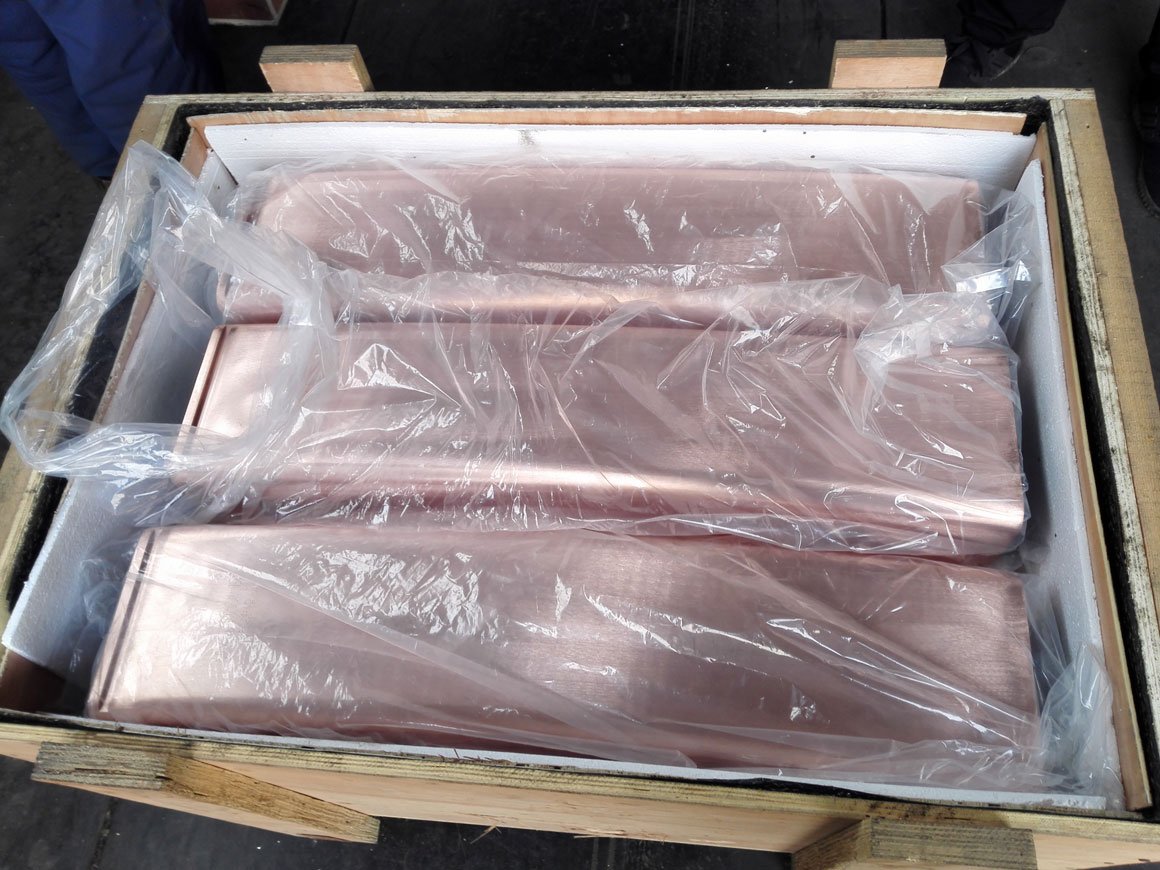
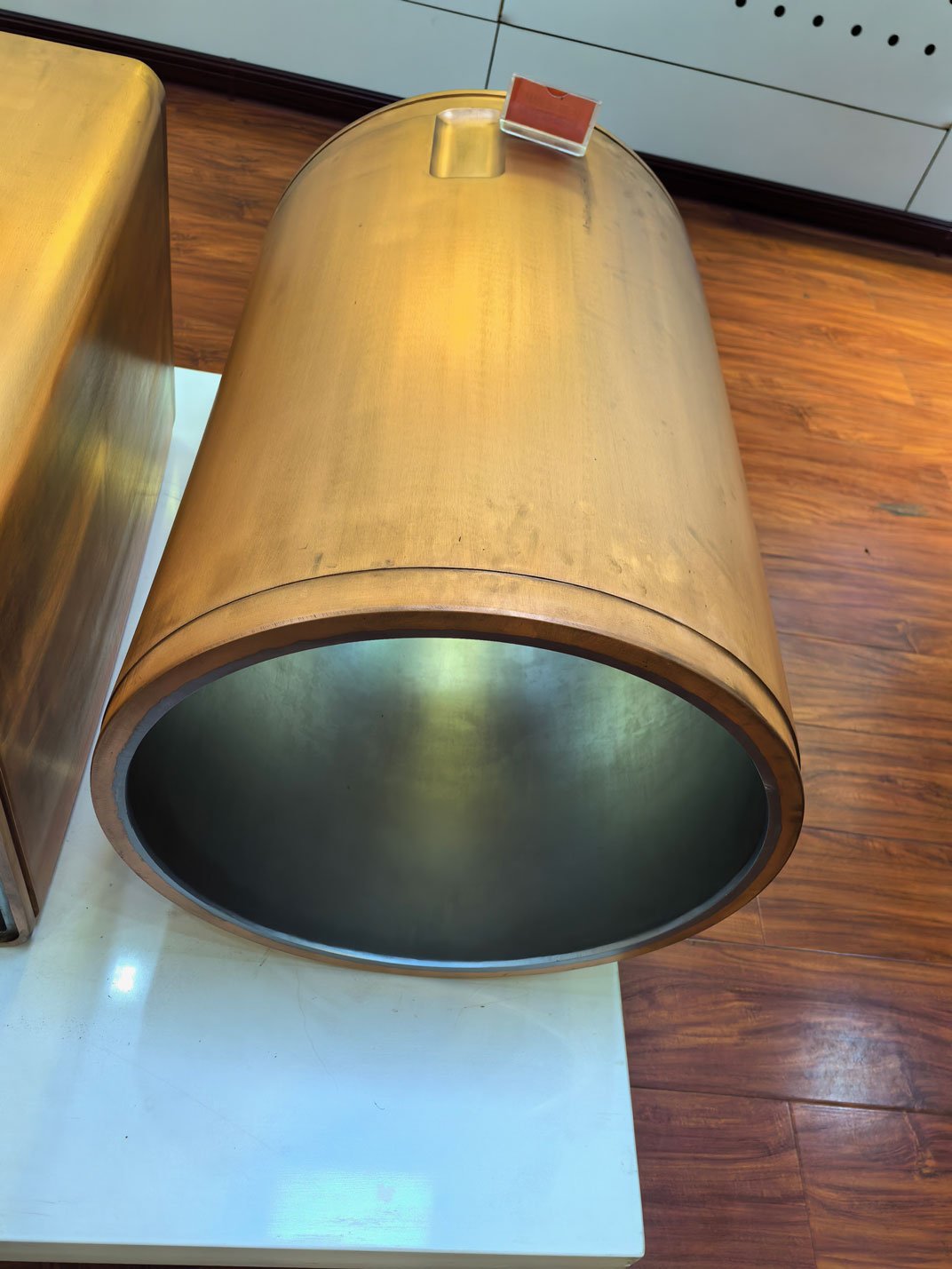
Billet Mold Tubes
Billet molds are typically used for producing square or round billets which are later rolled into products such as:
- Reinforcing bars (rebar)
- Wire rods
- Small structural sections
Billet copper molds are designed for high casting speeds and efficient heat removal.
Bloom Mold Tubes
Bloom molds produce larger square or rectangular sections known as blooms. These are later processed into:
- Railway rails
- Heavy structural steel
- Forging materials
Bloom molds require greater mechanical strength and structural stability due to the larger casting size.
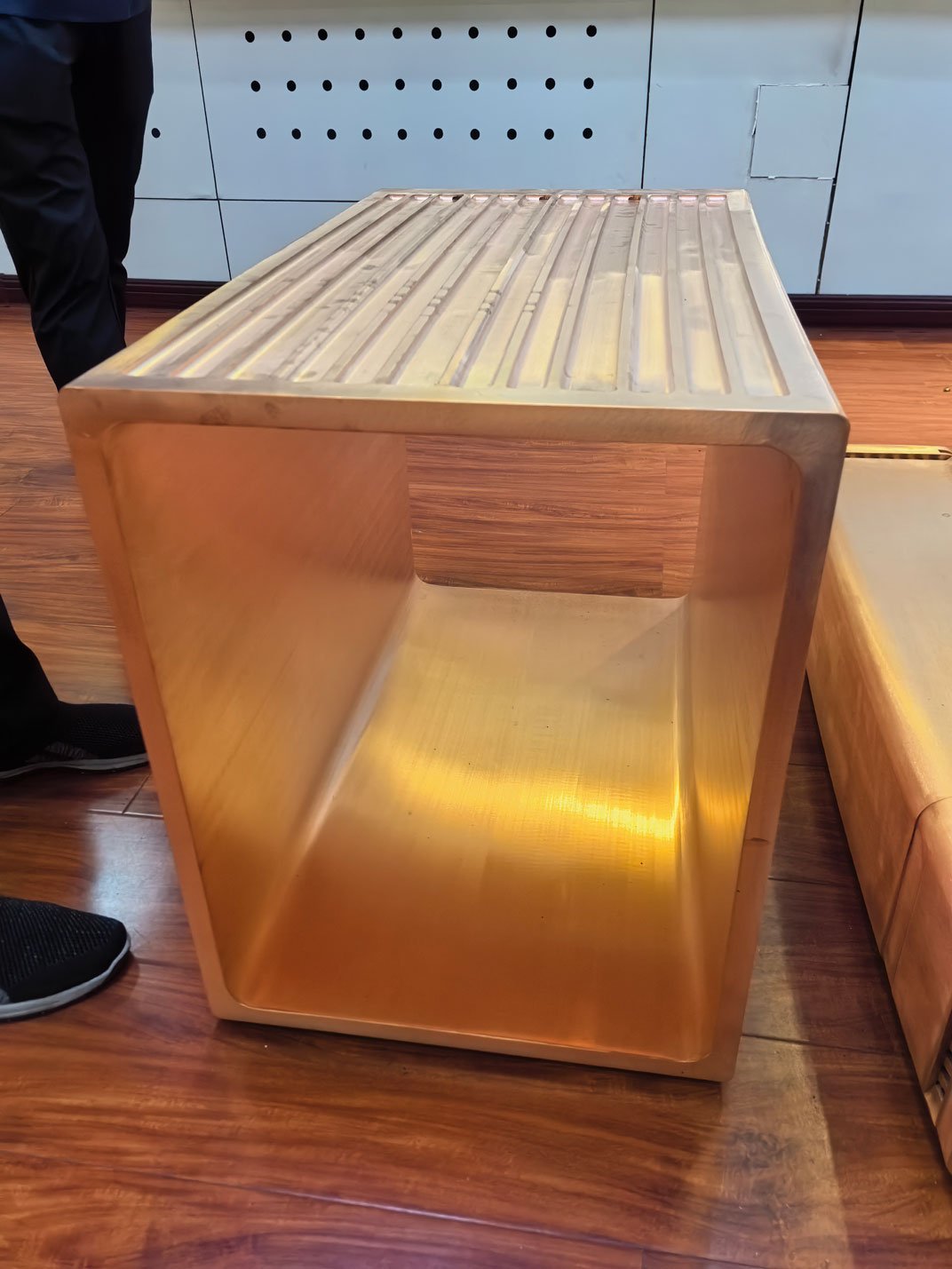
Slab Mold Plates
Slab molds are used to produce wide flat slabs that are rolled into:
- Hot rolled coils
- Steel plates
- Automotive sheet steel
Slab copper molds must ensure uniform heat transfer across wide surfaces to prevent surface cracks and internal defects.
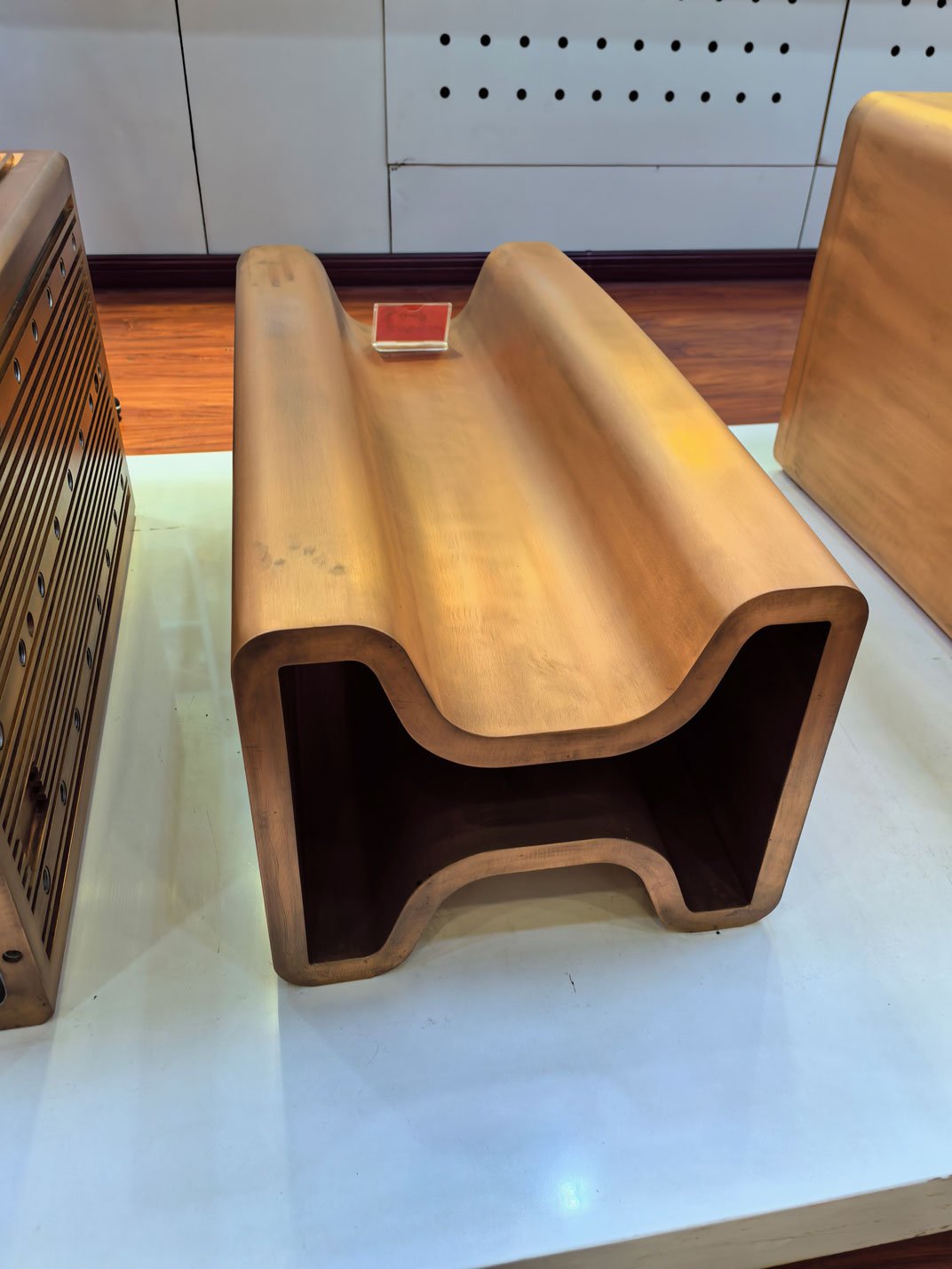
Beam Blank Molds
Beam blank molds are specially designed for casting profiles used in structural steel production, including H-beams and I-beams.
Surface Coating Technologies
Copper molds are typically coated with protective layers to enhance durability and extend operational life. Without protective coatings, pure copper would wear rapidly due to friction and thermal stress.
The most common coating technologies include:
Nickel Plating
Nickel coatings are widely used because they provide:
- Improved hardness
- Increased wear resistance
- Protection against corrosion
Nickel-plated copper molds are commonly used in billet casting applications.
Chrome Plating
Chrome coatings provide excellent resistance to abrasion and high-temperature oxidation. Chrome-plated molds are often used in demanding casting environments.
Nickel-Cobalt Alloy Coating
Ni-Co coatings offer improved hardness and wear resistance compared to conventional nickel plating. They are commonly used in high-speed casting operations where mold wear is more severe.
Cooling Channel Engineering
Efficient cooling is one of the most important aspects of copper mold design. Inside each copper mold, precision-engineered cooling channels circulate water to extract heat from the molten steel.
Key cooling parameters include:
- Cooling water flow rate
- Channel configuration
- Water pressure
- Uniform heat distribution
Optimized cooling design helps prevent serious casting issues such as:
- Shell breakouts
- Surface cracking
- Uneven solidification
Advanced mold manufacturing technologies ensure that cooling channels are positioned precisely to maintain consistent temperature control throughout the mold.
Mold Taper and Dimensional Precision
As molten steel solidifies inside the mold, it undergoes thermal shrinkage. To compensate for this shrinkage, copper molds are designed with a precise internal taper.
Accurate taper design helps maintain continuous contact between the solidifying steel shell and the mold wall, ensuring efficient heat transfer.
Modern copper molds are manufactured using high-precision machining processes that guarantee:
- Tight dimensional tolerances
- Smooth internal surfaces
- Accurate taper profiles
These characteristics are essential for maintaining stable casting conditions and preventing defects in the steel strand.
Applications of Copper Molds in the Steel Industry
Copper molds are widely used in continuous casting machines across steel plants worldwide. Their applications include several key segments of the steel industry.
Billet Production
Copper mold tubes used in billet casters play a critical role in producing billets that are later processed into:
- Reinforcing bars
- Wire rods
- Light structural sections
High-quality molds allow steel producers to achieve high casting speeds and consistent billet quality.
Bloom Casting
Bloom casting operations rely on durable copper molds capable of handling larger cross-sections and higher thermal loads. Bloom products are commonly used for:
- Rail production
- Heavy construction steel
- Forged components
Reliable copper molds help ensure stable bloom casting operations and reduce production interruptions.
Slab Casting for Flat Steel
In flat steel production, slab molds are used in continuous casting lines supplying rolling mills that produce:
- Hot rolled coils
- Cold rolled sheets
- Automotive steel
- Pipeline steel
Slab molds must maintain extremely uniform cooling to prevent internal defects and surface cracks.
Special Steel Casting
Copper molds are also essential in casting special steels, including:
- Stainless steels
- Alloy steels
- Tool steels
These materials often require advanced mold coatings and optimized cooling designs due to their unique metallurgical properties.
Advantages of High-Quality Copper Molds
Using high-performance copper molds offers significant advantages for steel producers:
- Improved casting stability
- Higher product quality
- Reduced breakout risks
- Longer mold service life
- Lower maintenance costs
- Higher production efficiency
For steel plants operating high-speed continuous casting lines, reliable copper molds are essential for maintaining stable operations and minimizing downtime.
Choosing the Right Copper Mold Supplier
Selecting a reliable copper mold supplier is critical for ensuring long-term casting performance. Important factors to consider include:
- Quality of copper alloys used
- Precision manufacturing capabilities
- Advanced coating technologies
- Strict quality control procedures
- Experience in the steel industry
Suppliers who understand the requirements of modern steel plants can provide molds designed to meet specific casting conditions and production targets.
Conclusion
Copper molds are indispensable components in the continuous casting process of steel manufacturing. Their material composition, coating technology, cooling design, and dimensional precision directly influence casting stability and final steel quality.
Steel producers rely on high-quality copper molds to achieve efficient heat transfer, stable casting performance, and consistent product quality. As continuous casting technology continues to evolve, advanced copper mold solutions remain a key factor in improving productivity and operational reliability in modern steel plants.